How to Evaluate a Buildable Lot in Sevierville Cabin Areas
April 16, 2026
April 16, 2026
Buying land for a future cabin in Sevierville can feel simple at first glance. A listing may show road frontage, a nice view, and plenty of acreage, but that does not always mean the lot is truly buildable. If you want to avoid expensive surprises, you need to look beyond the photos and evaluate the real constraints that affect cabin construction, permitting, and short-term rental use. Let’s dive in.
The first step is to confirm whether the lot sits inside Sevierville city limits or in unincorporated Sevier County. That single detail affects which permit system applies and which rules you will need to follow.
The City of Sevierville encourages property owners and buyers to verify city limits before moving forward with permits. Its GIS maps include city limits, zoning, flood zones, and road classifications, which makes them one of the most useful starting points for due diligence.
If the parcel is inside city limits, the city’s Department of Development handles building permits for new construction. If it is outside city limits, county zoning rules govern the property, and the county zoning official can deny a permit if the proposed use is not allowed or if setbacks cannot be met.
For larger resort-style or multi-unit projects inside the city, site plan approval may also be required. In those cases, the plan must be prepared by a Tennessee-registered professional.
Once you know the jurisdiction, the next question is zoning. In unincorporated Sevier County, zoning districts include A-1, R-1, R-2M, R-2, C-1, C-2, I-1, and the Critical Slope district under the county’s zoning resolution.
This matters because zoning affects more than just whether you can build. It also shapes setbacks, lot standards, and in some cases whether a future short-term rental use may be possible. A lot that looks attractive online may still be difficult to use if the zoning or overlay rules limit the build area.
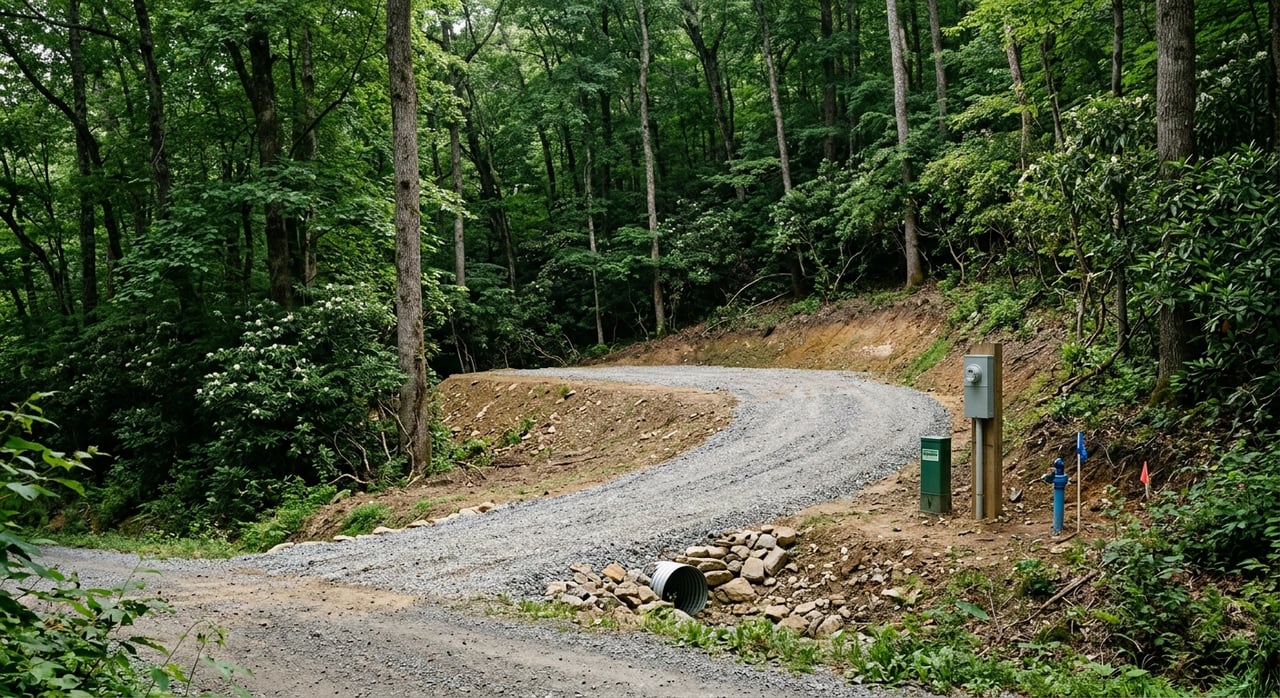
In Sevierville cabin areas, acreage alone does not tell you much. What matters is the build envelope, meaning the portion of the lot where a cabin, driveway, parking, and supporting improvements can actually fit.
Sevier County’s subdivision regulations show why this is so important. Setbacks can vary depending on road type and average slope, so a large mountain lot may still leave you with a small usable building area once those measurements are applied.
For example, on minor residential streets, the minimum front setback is 20 feet on lots with an average slope of 0% to 29.9%, 10 feet on 30% to 49.9%, and 5 feet on 50% or greater. Major collectors require a 40-foot front setback, while arterials or highways require 50 feet.
Side and rear setbacks are generally 10 feet, or 25 feet for lots that are 30,000 square feet or larger. Those numbers can quickly shrink your layout options, especially if the parcel has irregular boundaries or a steep drop.
A steep lot is not automatically unbuildable, but slope changes the process and the cost. In Sevier County, the Critical Slope district begins at an average slope of 30% or greater under the county’s zoning rules.
When a lot falls into that category, the county requires slope calculations supported by topographic mapping. For disturbed areas, 2-foot contours are used. For undisturbed areas, 5-foot contours are used.
Steeper sites can also trigger extra road-safety requirements. County rules call for emergency staging areas on road sections with slopes between 15% and 18%, which shows that steep terrain affects more than just the cabin pad.
This is one reason a current survey and topographic review matter so much. Listing photos may show views and trees, but they cannot confirm the measured slope, setback lines, or the actual buildable footprint.
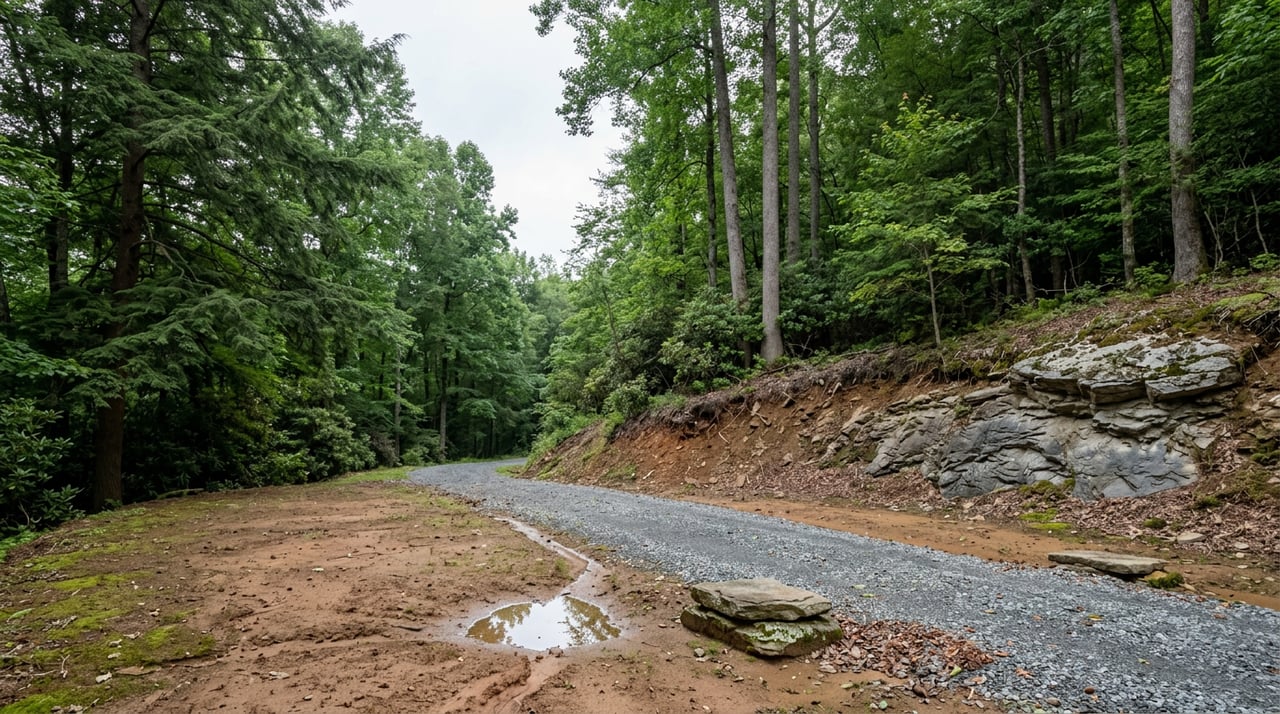
A lot with road frontage still needs a closer look. In mountain markets, access is often the deciding factor between a practical building site and a frustrating project.
Sevier County treats some private permanent easements serving two or more lots as private streets under its subdivision regulations. Those access systems must still support emergency services, utilities, and other necessary public services.
That means you should confirm:
County standards are specific. Type I private streets cannot exceed 1,200 feet, cannot serve more than 10 lots, and cannot exceed a 12% maximum grade. Type II private streets are intended for rural roads, require a minimum 50-foot right-of-way, and cannot be used to provide access to lots under five acres.
Dead-end streets are not allowed in proposed county subdivisions, and cul-de-sacs must meet turnaround standards. Even if a lot appears easy to reach, road design and compliance can still create delays or added cost.
Many cabin lots sit within developments, resort communities, or planned unit developments. In these settings, it is important to confirm not just physical access, but also the legal framework behind roads, open space, and maintenance.
The county allows some flexibility in planned unit developments, but it still expects legal arrangements for open space and road maintenance, often through an owners association or similar structure under the county zoning resolution.
If you are evaluating a lot in a cabin subdivision, you will want to understand how access is maintained and whether any easements limit where you can place a driveway, utilities, or parking area.
Utilities can make or break a land purchase. The City of Sevierville’s water and sewer department serves the city and some areas outside city limits, but not every cabin parcel will have access to public sewer.
Where public sewer is not accessible, county rules allow an alternate sewage-disposal method only with approval. That usually means septic feasibility needs to be part of your early due diligence, not a later step.
The State of Tennessee says a septic system permit should be obtained before dirt work or building-pad construction starts. If land is being divided into two or more lots for present or future septic-served construction, a subdivision evaluation is also required.
Alternative septic systems may require a soils consultant and additional review. On steep or wooded mountain lots, that can affect where the driveway, cabin pad, and drain field can go.
Drainage is easy to underestimate in the Smokies. On sloped land, runoff patterns can shape the entire site plan, especially for driveways, parking areas, and foundation placement.
Sevier County’s subdivision rules require drainage planning, stormwater control, cross drains, and watercourse protection. In practical terms, a lot may need more engineering work than buyers expect before it is ready to build.
Floodplain status matters too, especially for lots near creeks, drainage channels, or lower-lying areas. The City of Sevierville participates in FEMA’s National Flood Insurance Program, and its code enforcement resources include floodplain development tools such as elevation certificates and no-rise certificates.
You can also check the official FEMA Flood Map Service Center through the city’s floodplain resource page. If flood-related requirements apply, they may change the foundation design, finished-floor height, or permit path.
This is one of the biggest mistakes buyers make. A lot may be physically buildable, but that does not mean it will work for a short-term rental cabin.
Inside the City of Sevierville, short-term rental use is controlled by district and requires an annual short-term rental permit tied to a life-safety inspection. The permit must be obtained before operating or advertising the rental.
The city’s rules are specific. AC allows only timeshare-type short-term rental use. HRO allows short-term rentals only on collector or arterial streets and only if parking and solid-waste requirements can be met. MDR allows short-term rentals with nearby-owner notice and may require a public hearing if opposition is raised.
In unincorporated Sevier County, overnight rental use also requires a short-term rental permit, and operating without one can trigger daily penalties. County guidance also advises buyers to confirm the certificate of occupancy and whether the property is located in an area that allows short-term rentals.
If you plan to maximize guest count, you also need to understand occupancy limits. The county’s occupancy guidance explains that the certificate of occupancy sets the cap unless the structure is reviewed and approved for a change.
When you evaluate a buildable lot in Sevierville cabin areas, the order of operations matters. A clear process helps you avoid spending time and money on a parcel that cannot support your goals.
A practical due diligence sequence looks like this:
This approach reflects the way city and county permit systems are structured. It also gives you a much clearer picture of whether a lot is truly usable for a cabin build, a second home, or a future investment property.
A good mountain lot can be a strong opportunity, but the best purchases are the ones backed by careful review. If you want local guidance on land, cabin sites, or short-term rental property in Sevier County, Kristi Street offers a consultative approach grounded in local market knowledge and practical property analysis.
Stay up to date on the latest real estate trends.
With over 20 years of experience in the Smoky Mountains market, I help buyers, sellers, and investors navigate resort and residential real estate with confidence. My background in short-term rentals gives my clients a strategic edge—from zoning and income potential to identifying properties that truly fit their goals. I approach every transaction with integrity, transparency, and careful attention to detail, so you can move forward informed, protected, and positioned for long-term success.
Let's Connect
405 Boyds Creek Hwy Seymour, TN 37865