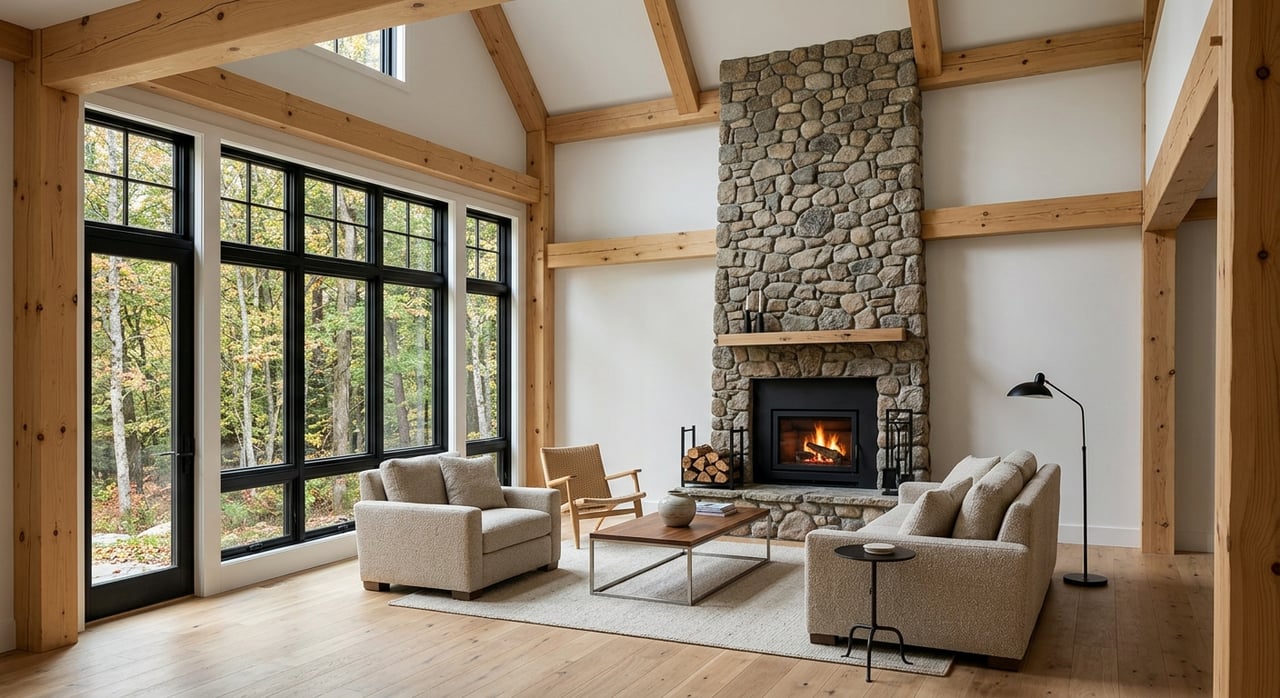
Understanding Gatlinburg Cabin Rental Income Potential
June 25, 2026
June 25, 2026
If you own a cabin in Gatlinburg, or you are thinking about buying one, you have probably asked the big question: what really drives rental income here? The answer is not just "tourism is strong," even though demand is clearly supported by the Smokies. What matters more is how your specific property fits the market, what it costs to operate, and whether the address works for short-term rental rules. Let’s break down how Gatlinburg cabin owners typically think about rental income so you can make smarter decisions.
Gatlinburg benefits from one of the strongest tourism engines in the country. Great Smoky Mountains National Park recorded 11.5 million visitors in 2025, and the busiest stretch is typically June through October, with more than 1 million visits in each of those months in 2023.
That demand matters because most visitors stay in surrounding communities, not inside the park. The park notes there are no hotels or rental cabins inside the park other than LeConte Lodge, so nearby markets like Gatlinburg supply much of the lodging.
For cabin owners, that creates a solid demand backdrop. It also does not mean every cabin performs the same, because a strong market can still be highly competitive.
One of the biggest mistakes owners make is focusing on a single projected annual revenue number. In Gatlinburg, seasonality is real, and income usually changes a lot between peak months, shoulder months, and slower periods.
National Park Service data shows summer and fall are especially busy, while winter can bring snow in higher elevations and spring can be less predictable. Visitor studies also show a multi-night leisure market, with a median local-area stay of 4 days in summer and 3 days in winter.
That means you should underwrite a cabin month by month, not just by using an annual average. A realistic income model should ask how the property performs in:
This is one reason local guidance matters. A cabin that looks strong on paper may tell a different story once you break out the calendar.
In Gatlinburg, owners usually think about location in a very practical way. It is not only about being "close" to town. It is about how easily guests can reach downtown Gatlinburg, the national park, and popular access points without turning the stay into a driving headache.
Research on short-term rental pricing consistently shows that access to attractions and nearby amenities influences pricing. In this market, that often translates into easier routes, more predictable arrival experience, and less friction for guests trying to enjoy the Smokies.
The park also advises visitors during busy periods to enter no later than 8 a.m. or around 3 p.m., and parking tags are required for vehicles parked in the park longer than 15 minutes. That makes convenience more valuable than many owners first realize.
Cabins with simpler access and easier parking can have a practical edge. If guests can arrive without stress, unload comfortably, and get to town or the park with less effort, the property may be easier to market and easier to book.
In a mountain market, two cabins with similar square footage can produce different results if one has better drivability, easier parking, or a more usable location for the guest experience.
Many owners assume more amenities automatically mean more income. In reality, Gatlinburg owners who perform well usually focus on the right amenities for the target guest, not just the longest feature list.
Recent research points in that direction. One 2025 study found cleanliness, location, and amenities were influential price factors, while a 2023 study found total amenity count alone was not significantly tied to pricing power. Differentiation mattered more.
That is an important mindset shift. A cabin does not need every possible add-on. It needs an amenity package that feels cohesive for the guest who is most likely to book it.
In Gatlinburg, some features are simply expected. AirDNA’s public market snapshot shows internet and Wi-Fi are nearly universal, and that makes sense because cell coverage in the park is extremely limited.
So reliable Wi-Fi is not really a luxury feature here. It is part of the baseline guest experience.
Beyond that, owners should think about whether the cabin’s features match the intended guest profile. For example:
The goal is not to chase every trend. The goal is to create a rental that feels well-matched to the people most likely to choose it.
Larger cabins can produce strong revenue, but they also appeal to a narrower guest pool. Research suggests larger properties often attract more specific traveler types, such as large groups or higher-income family travelers.
That means owners should not assume more bedrooms automatically create better returns. A larger cabin can carry higher rates, but it also comes with a smaller target audience and potentially higher operating costs.
A smarter question is this: Who is this cabin for? Once you know that, you can evaluate whether the bedroom count, layout, parking, and amenity package support that guest type.
Gatlinburg is not a sparse short-term rental market. AirDNA’s public page currently estimates 6,907 active STR properties, with 53% occupancy, a $347 average daily rate, and RevPAR of $184.7.
That tells you two things. First, there is meaningful demand. Second, there is a lot of competition.
Research also shows that a higher number of similar nearby listings can weaken pricing power. For cabin owners, this means your property should be judged against its true comp set, not against the top-performing outlier you saw online.
When experienced owners think about income, they often compare cabins on:
This is the difference between broad market demand and actual property performance. Gatlinburg supports a lot of rentals, but income usually comes from matching your submarket well, not from assuming every listing books the same way.
Public market data also suggests Gatlinburg is largely a whole-home rental market. AirDNA reports 97% of listings are entire homes, and 60.2% use a 2-night minimum.
That points to a market built around weekend trips, short breaks, and multi-night leisure stays more than one-night turnover. Owners who understand this often build their income expectations around booking patterns that fit local demand instead of forcing a long-stay model that may not match the market.
This can affect everything from pricing strategy to cleaning schedules to guest communication. A cabin that works well for 2- to 4-night trips may be better aligned with Gatlinburg demand than one designed around longer occupancy assumptions.
This is where many first-time buyers get surprised. Strong booking potential does not always translate into strong usable cash flow.
Owners in Gatlinburg usually think carefully about the full cost stack. That includes permits, taxes, utilities, insurance, cleaning, management, reserves, and property-specific compliance items.
The exact property address matters because the permit path changes by jurisdiction.
Within Gatlinburg city limits, overnight rentals require a Tourist Residency Permit, proper zoning, and fire and building inspection. The city states the permit fee is $200 for a unit with two or fewer bedrooms, plus $75 per bedroom above that.
In unincorporated Sevier County, a short-term rental permit has been required since January 1, 2024. The county lists an annual operational permit fee of $250 for occupancy of 12 or fewer, plus $25 per additional occupant, and unpermitted operation may be penalized at $50 per day.
That is why experienced buyers start with jurisdiction before they ever settle on a revenue projection.
Tennessee guidance states that short-term rentals of fewer than 90 consecutive days are subject to sales tax, and additional local lodging or occupancy taxes may also apply. Those items reduce net income, even when the gross booking totals look attractive.
Owners also need to account for practical operating items. In Gatlinburg, properties holding a Tourist Residency Permit are now included in the city’s animal-resistant container zone, with compliance required by June 30, 2025. Trash handling and wildlife-safe operations are now part of the budget conversation too.
The strongest income models are usually simple, disciplined, and local. Instead of chasing a headline number, smart owners compare a property to the right comp set and then stress-test the income by season.
A solid framework usually includes:
This is the approach many successful Gatlinburg buyers and owners use because it keeps the analysis grounded in reality.
If you are buying, the goal is not to find any cabin in a strong market. The goal is to find a cabin that fits demand, has a workable permit path, and supports realistic net income after expenses.
If you are selling, buyers are often more informed than they used to be. A cabin that shows clear positioning, strong amenity fit, and a realistic story around access, use, and compliance can stand out more effectively in a crowded market.
This is where a local, consultative approach matters. In a market as nuanced as Gatlinburg, a useful conversation is rarely just about price per square foot. It is about how the property actually performs in the real world.
Whether you are evaluating a purchase, pricing a sale, or trying to understand a cabin’s earning potential, working with someone who understands Sevier County’s resort-style micro-markets can help you see the full picture. If you want local guidance on cabin valuation, STR income projections, or permit and zoning insight, connect with Kristi Street for a consultation.
Stay up to date on the latest real estate trends.
With over 20 years of experience in the Smoky Mountains market, I help buyers, sellers, and investors navigate resort and residential real estate with confidence. My background in short-term rentals gives my clients a strategic edge—from zoning and income potential to identifying properties that truly fit their goals. I approach every transaction with integrity, transparency, and careful attention to detail, so you can move forward informed, protected, and positioned for long-term success.
Let's Connect
405 Boyds Creek Hwy Seymour, TN 37865