The Pigeon Forge Cabin Permit That Doesn't Survive Closing
August 27, 2026
August 27, 2026
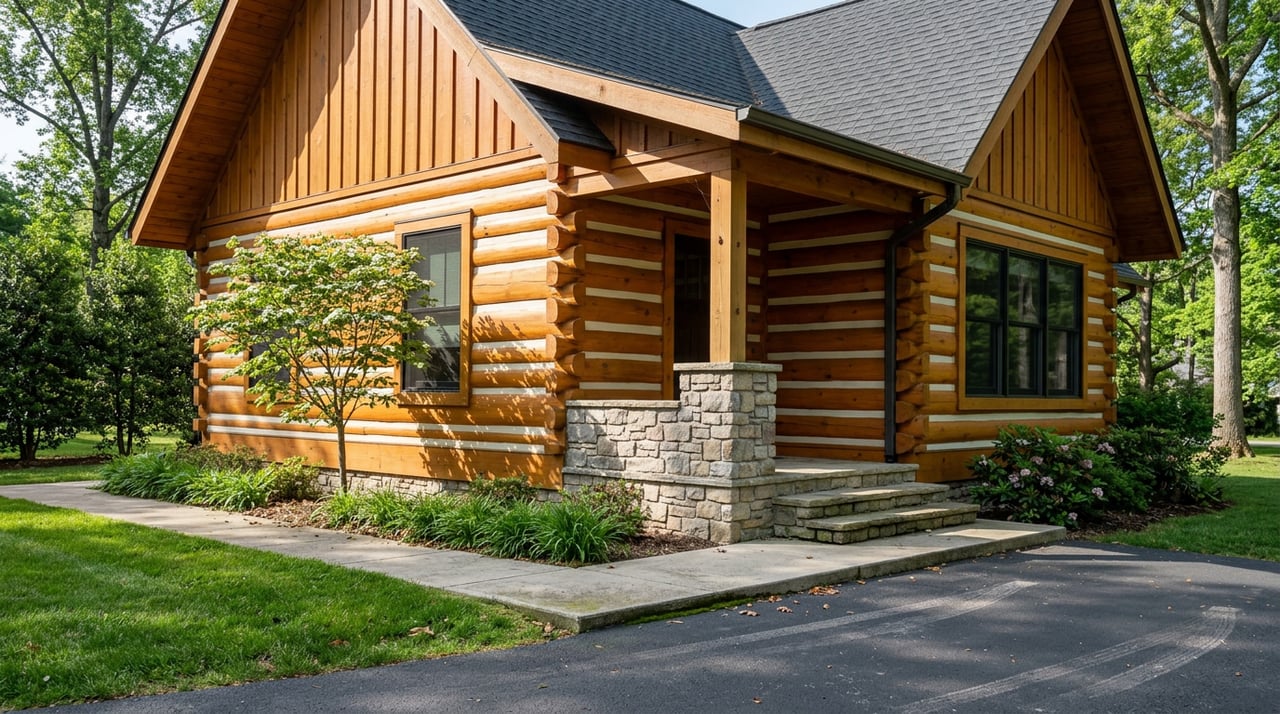
An investor calls Kristi about a cabin in Eagles Ridge Resort. The listing shows a full booking calendar, a permit number posted on the front door, and a trailing twelve months of rental income that makes the math look easy. The investor's plan is simple: close, keep the same management company, keep the same listing live, let the revenue keep flowing.
That plan has a hole in it, and the hole is not in the numbers. It is in the assumption that the permit comes with the house.
Under Pigeon Forge's zoning ordinance, a Short-Term Rental Unit permit is valid for one calendar year, is explicitly non-transferable, and becomes void the moment ownership changes. Not renegotiated. Not reissued in the new owner's name as a formality. Void. Whatever the seller's permit number is, whatever inspection history it carries, whatever revenue it produced last season, none of it legally belongs to the buyer at closing. The buyer starts from zero and has to reapply.
For most Pigeon Forge cabins, that is an inconvenience. In one specific zoning district, it can be the difference between buying a rental property and buying a house that happens to look like one.
If the cabin sits in an R-2 or higher residential district, or in a commercial zone, reapplying after closing is mostly paperwork. The city's Community Development Office at 3211 Rena Street handles the application, which currently carries a $300 fee, alongside a separate Transient Rental Registration that runs $125 to start and $75 a year after. A fire and safety inspection has to pass before the permit is issued, covering the basics: smoke alarms, carbon monoxide detectors, a fire extinguisher, and a designated 24/7 local contact who can physically respond to a complaint within 45 minutes. Occupancy is capped at two guests per bed, two beds per room, twelve people total, regardless of what the floor plan can technically sleep.
None of that is a reason to walk away from a deal. It is a reason to build a two to four week buffer into the closing timeline so the new permit is active before the first post-closing guest checks in, rather than finding out mid-turnover that the listing needs to come down.
The city has restricted new short-term rental development in its R-1 residential district since 2018. Under Section 511 of the zoning ordinance, a residence in R-1 can only operate as a short-term rental if it was already being used that way on or before August 13, 2018. The city has not been issuing new R-1 permits to properties without that history since the rule took effect, and the ordinance also expects continuous operation to preserve that grandfathered standing.
Here is where the two rules collide. If the permit is legally tied to the property's operating history, but the permit itself is non-transferable and voids at closing, a buyer in R-1 is not simply renewing an old permit under a new name. They are filing what the city treats as a new application, for a district where new applications have not been the path in for years. Whether the underlying grandfathered eligibility survives a change of ownership, or whether a lapse at closing counts as a break in continuous operation, is exactly the kind of question that needs a direct answer from the Community Development Office in writing before an offer goes in, not an assumption carried over from the listing sheet.
This is also where a lot of general advice about Smoky Mountain STRs quietly misleads buyers. Guides written for the whole region often tell buyers to "confirm the grandfathered permit transfers with the sale," as though transfer is the mechanism to check. In Pigeon Forge city limits, transfer is not the mechanism at all. The permit does not transfer. It ends. The question worth asking is not whether it transfers, but whether the property's R-1 eligibility and operating history are strong enough to support a clean new application the moment the old one dies.
Drive out of Pigeon Forge city limits into unincorporated Sevier County and the permit rule reverses. The county's own Short-Term Rental Unit Permit Program, run through the Fire Marshal's Office, publishes separate forms for "Purchasing a Short-Term Rental" and "Selling a Short-Term Rental," which only make sense if the county expects permits to change hands as part of a sale. A county permit that has been kept current and never lapsed can pass with the property. The county's system still has teeth. A three-strikes policy allows revocation after three documented violations for noise, trash, or parking, and the combined lodging tax runs closer to 12.75 percent versus the city's roughly 12.25 percent.
That means a buyer comparing two cabins, one just inside the Pigeon Forge line and one just outside it, is not just comparing price and location. They are comparing two entirely different answers to the question of what happens to the rental license at closing. A cabin's mailing address will not tell you which rule applies. The Sevier County GIS Hub will.
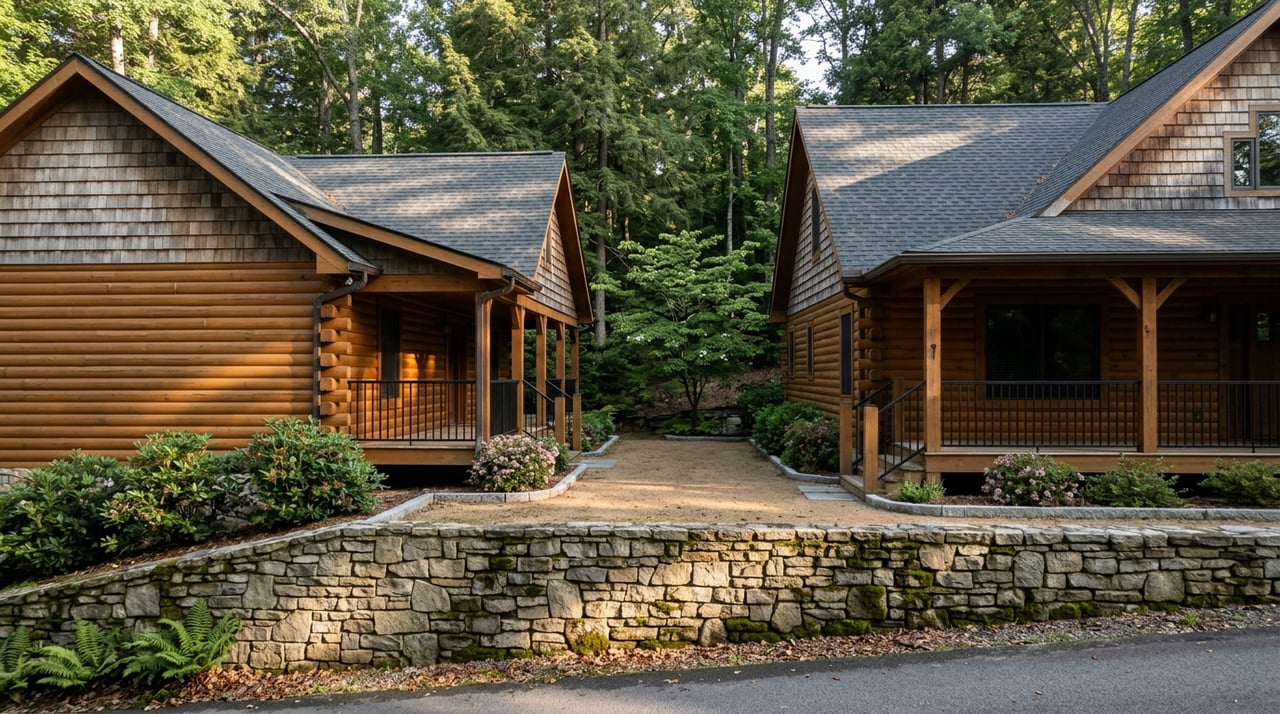
Even a cabin with a clean R-2 permit path is not automatically clear to rent. Pigeon Forge does not enforce private HOA covenants or deed restrictions, which means a subdivision's own rules sit entirely outside the city's permitting process. Many of the area's most heavily rented cabins sit inside resort communities such as Eagles Ridge Resort, Eagles Ridge North, Brookstone Village, Sherwood Forest Resort, Covered Bridge Resort, Blackberry Ridge Resort, and Legacy Mountain Resort, each with its own bylaws governing whether short-term rental is allowed at all, along with parking, occupancy, and noise provisions layered on top of the city's rules. A city permit says nothing about whether the HOA agrees.
If the cabin is already operating as an Airbnb, doesn't that prove it's legal for me to keep running it? It proves the seller had a valid permit. It does not prove you will. In Pigeon Forge city limits, that permit ends at closing regardless of how the property was operating the day before.
Does this apply the same way in Gatlinburg or Sevierville? No. Each city runs its own permit program with its own rules, and unincorporated Sevier County runs a separate system again. Zoning and permit mechanics need to be checked for the specific jurisdiction the parcel sits in, not assumed from a neighboring city's rules.
Is there any way to avoid the reapplication gap entirely? Not in city limits. The ordinance builds the void-on-sale rule in regardless of buyer intent. The realistic goal is minimizing the gap, not eliminating it, by starting the zoning and permit-history verification before the offer is written rather than after the inspection period.
A cabin's trailing revenue is real. The permit that produced it does not automatically follow the deed. If you're evaluating a Pigeon Forge property with rental income in mind, Kristi Street can walk the zoning, permit history, and HOA documents with you before you're locked into a contract, and help you build a realistic income picture around what the property can actually be permitted to do after closing, not just what the last owner was doing before it.
Stay up to date on the latest real estate trends.


With over 20 years of experience in the Smoky Mountains market, I help buyers, sellers, and investors navigate resort and residential real estate with confidence. My background in short-term rentals gives my clients a strategic edge—from zoning and income potential to identifying properties that truly fit their goals. I approach every transaction with integrity, transparency, and careful attention to detail, so you can move forward informed, protected, and positioned for long-term success.
Let's Connect
405 Boyds Creek Hwy Seymour, TN 37865