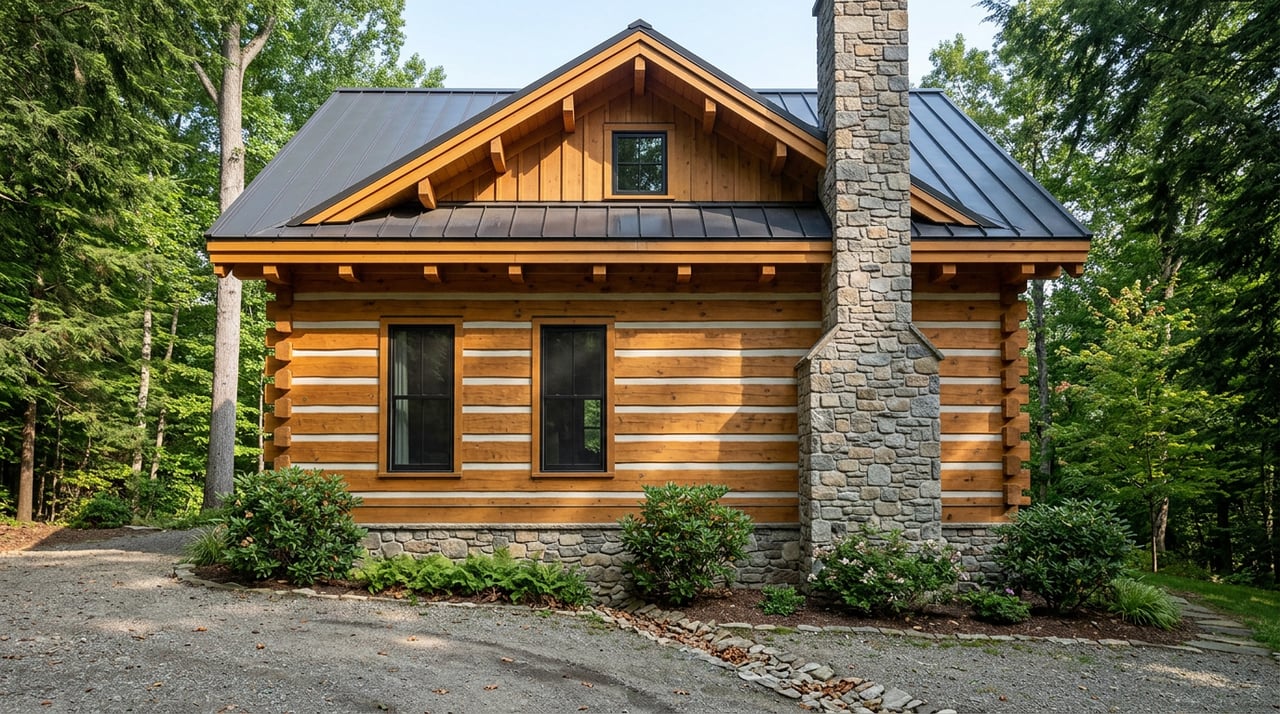
Gatlinburg Short-Term Rental Costs Buyers Need to Price In
August 6, 2026
August 6, 2026
A buyer runs the numbers on a Gatlinburg cabin the way most buyers do. Portal ADR, portal occupancy, 25% residential property tax assessment, standard insurance, a management fee. The pro forma clears an 8% cap. They write the offer.
Two things happen after the inspection period closes. The zoning department confirms the parcel sits in R-1A, which means it cannot be issued a Tourist Residency Permit. Or the permit clears, October arrives, and the assessment change notice from the Sevier County Property Assessor's office reclassifies the cabin at 40% instead of 25%. Neither of these is a surprise to anyone who has closed on a Gatlinburg rental in the last three years. Both are invisible on a listing sheet. This post is about what they cost, and how to price them into an offer before you sign.
Gatlinburg is often described as investor-friendly, and on the whole that is accurate. Tennessee state law preempts outright STR bans, the city does not cap the number of Tourist Residency Permits it issues, and the City of Gatlinburg processes applications at the Customer Service Center at 912 East Parkway or by mail to City Hall. That framing is what makes the zoning rule feel like a surprise when it lands.
Gatlinburg allows STRs in R-1, R-2, R-3, C-1, C-2, tourist commercial, and mixed-use zones. It prohibits them in R-1A and R-2A, the low-density and medium-density residential zones. A cabin can look identical to its neighbor across the ridge, share the same view, sit at a similar elevation, and be legally ineligible for a permit because of a two-letter difference in its zoning designation. Permits are also non-transferable when a property sells, so an existing operating STR next door tells you nothing about your parcel.
The verification is not hard. The city planning department will confirm zoning by phone at (865) 436-1400, and the Sevier County GIS parcel map will tell you whether the property sits inside city limits at all. A cabin with a Gatlinburg mailing address can still be in unincorporated Sevier County, which changes the rulebook to county STR permitting through the Fire Marshal's Office rather than the city TR permit. What is hard is remembering to do the check before earnest money goes non-refundable rather than after.
The permit fee itself is not the issue. The compliance stack around it is what buyers underestimate on year one and forget to renew in year two.
| Line item | Cost | Frequency |
|---|---|---|
| Tourist Residency Permit, 2 BR or fewer | $200 | Annual |
| Each additional bedroom above 2 | $75 | Annual |
| City of Gatlinburg business license | $15 | Annual |
| Sevier County business license | $15 | Annual |
| Fire and building inspection | Included with permit | Annual |
| Sprinkler system, if over 3 BR or 5,000 sq ft | Capital cost, varies | One-time |
A four-bedroom cabin comes in at $350 in permit and license fees before you count the sprinkler trigger. Chalet's April 2026 regulatory tracker models compliance costs at roughly 3.0% of gross revenue when you include the inspection, remittance work, and the time spent on the paperwork. On a median Gatlinburg STR earning $51,033 at $290 ADR and 52% occupancy, that is around $1,500 a year that a lot of first-year pro formas leave out.
The larger of the two frictions is a property tax reclassification, and it is the one buyers coming from other STR markets almost never model correctly.
Tennessee state law effective in 2021, and affirmed by the Sevier County Commission in April 2023, moves STR parcels that carry a business license and are not the owner's primary residence from a 25% residential assessment ratio to a 40% commercial assessment ratio. Sevier County Property Assessor Thomas King's office put the numbers on paper: a rental cabin appraised at $500,000 pays roughly $1,850 in county property tax at the residential rate and roughly $2,960 at the commercial rate. The county estimated the change would generate about $8 million in additional annual revenue and affect roughly 10,500 of the 13,000 identified overnight rentals in Sevier County.
The math scales linearly. Every $100,000 of appraised value adds about $222 in annual county property tax under the commercial assessment. A $900,000 cabin picks up close to $2,000 a year in property tax the day the assessor's office flags the business license, and that carrying cost does not appear anywhere on the MLS. Sevier County's next major reappraisal cycle is on its five-year schedule, which means most STR parcels are also carrying appraised values that the assessor's office publicly described as undervalued by more than 53% since 2021. The next reappraisal is a second variable to price into a five-year hold.
City tax rates layer on top of the county rate. Gatlinburg's city rate is $0.1257 per $100 of assessed value, which is low. Sevierville is $0.42540 and Pigeon Forge is $0.16520. City tax matters at the margin, but the assessment ratio matters at scale.
The frictions exist across Sevier County. They land harder in Gatlinburg for two reasons.
Gatlinburg carries the highest sticker prices in the corridor for comparable STR product, which means the 40% assessment applies to a larger appraised base. A four-bedroom cabin that appraises at $850,000 in Gatlinburg might appraise closer to $700,000 in Pigeon Forge or in unincorporated Wears Valley for a similar amenity package, which changes the annual commercial reclassification cost by about $330 a year before the city rate is even applied.
Gatlinburg is also the only jurisdiction in the three where the parcel-level zoning trap actually removes properties from the eligible pool. Pigeon Forge and unincorporated Sevier County both take a more permissive approach to STR zoning, with unincorporated county areas around Wears Valley and Walden's Creek broadly permitted through the county's STR Unit permit program administered by the Fire Marshal's Office since January 1, 2024.
The revenue side of the ratio does not always compensate. AirDNA's 2026 Sevierville market data, which aggregates the Pigeon Forge and unincorporated county cabins, shows an average daily rate around $331 and occupancy around 53%. Chalet's Gatlinburg-only figure sits at $290 ADR and 52% occupancy. The Gatlinburg name recognition premium is real, but it does not automatically produce a higher ADR than the surrounding county at the market median. That gap is what compresses cap rates on the buy side when you underwrite honestly.
The transaction friction is manageable once you know it exists. Five questions catch almost all of it.
Does the 40% commercial assessment apply if I use the cabin as a second home and only rent it sometimes? The reclassification hinges on whether the property carries a business license and is not the owner's principal residence. A property that operates as an STR under a business license is subject to the commercial classification. If the cabin is genuinely a second home with no business license and no STR activity, the residential ratio still applies. The Sevier County Property Assessor's office is the authority on borderline cases.
Are R-1A or R-2A parcels ever grandfathered? No. Tennessee's state STR framework preempts local bans but preserves local zoning authority, and Gatlinburg's zoning prohibition in R-1A and R-2A applies on a going-forward basis regardless of prior use. Existing operators in those zones have been the subject of enforcement, and permits are not issued for those parcels.
How much of the 12.75% lodging tax do I actually remit myself? Airbnb and Vrbo collect and remit the full 12.75% on stays booked through their platforms in most cases, but the 3% Sevier County lodging tax on any direct bookings is self-remitted monthly to the Sevier County Trustee by the 20th of the following month. Owners still need to register with the Trustee's office even if platforms are handling the full remittance.
The Gatlinburg STR market rewards buyers who underwrite the actual carrying cost rather than the sticker cost. A cabin that pencils at an 8% cap on a residential-rate pro forma often lands closer to 6.5% once the commercial reclassification and full compliance stack are priced in. That is still a defensible number in a market that generated $3.93 billion in Sevier County visitor spending in 2026 per the Tennessee Department of Tourist Development, but it is a different number, and it is the one you will actually live with in year two.
If you are evaluating a specific Gatlinburg parcel and want a second read on zoning, permit eligibility, and a stress-tested revenue model before you write the offer, Kristi Street works through this diligence with investors as part of every consultation. Request a consultation and home valuation to run the parcel and the pro forma together.
Stay up to date on the latest real estate trends.
With over 20 years of experience in the Smoky Mountains market, I help buyers, sellers, and investors navigate resort and residential real estate with confidence. My background in short-term rentals gives my clients a strategic edge—from zoning and income potential to identifying properties that truly fit their goals. I approach every transaction with integrity, transparency, and careful attention to detail, so you can move forward informed, protected, and positioned for long-term success.
Let's Connect
405 Boyds Creek Hwy Seymour, TN 37865